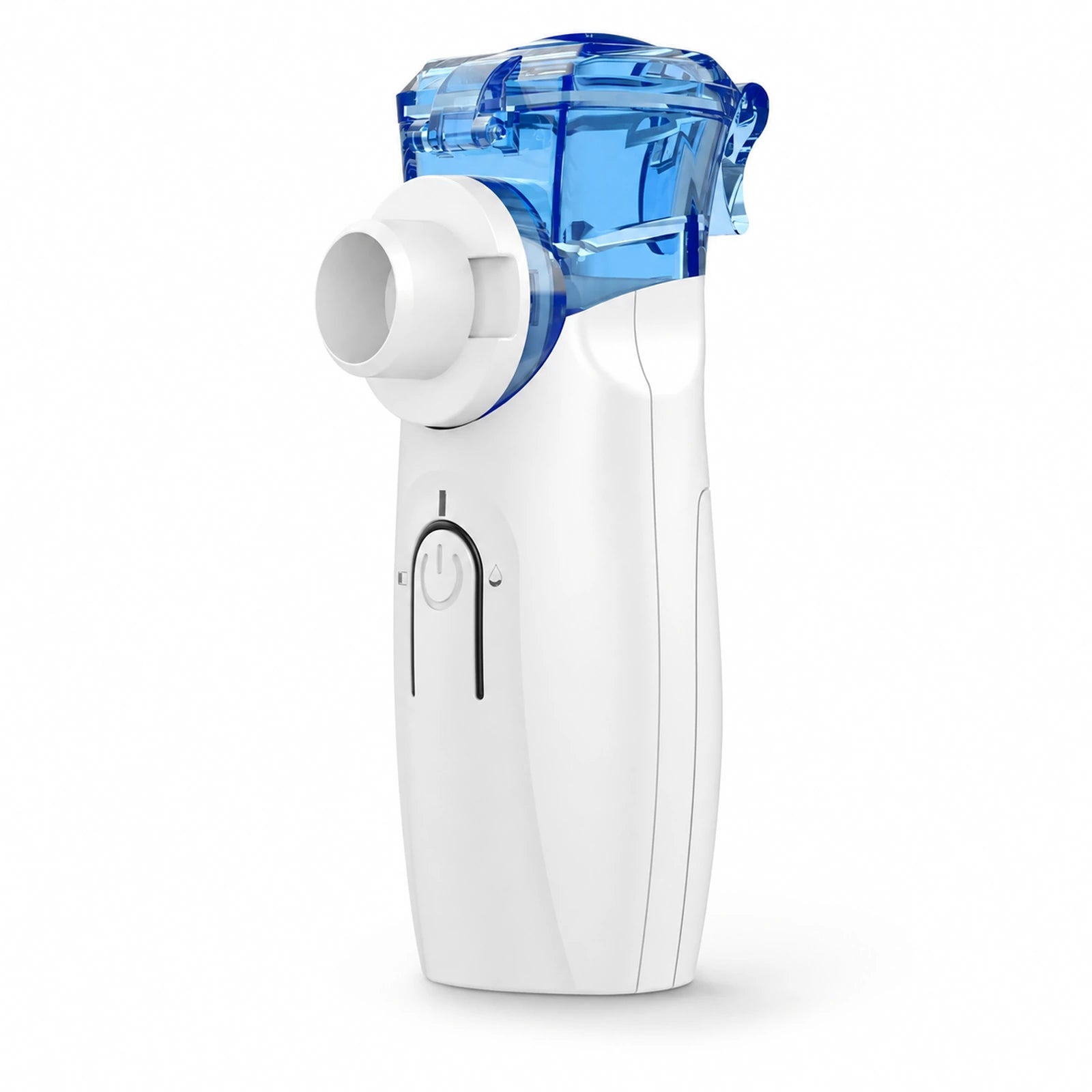
Yes. You can bring a nebulizer on a plane in your carry-on or checked bag, and the liquids that go with it are exempt from the usual 3.4-ounce limit in reasonable quantities if you declare them at screening. For a portable nebulizer with a built-in lithium battery, carry-on is the better choice. This guide covers security screening, battery rules, carry-on limits and using the device during the flight, with links to the official rules.
What TSA allows
TSA lists nebulizers as allowed in both carry-on and checked bags, with special instructions:
- Screening: the nebulizer may stay in its carrying case for X-ray screening, but an officer may ask you to remove it from your bag.
- Liquids: liquids associated with nebulizers are exempt from the 3-1-1 liquids rule in reasonable quantities.
- Batteries: TSA advises that devices with lithium batteries should be carried in carry-on baggage.
- Final say: the TSA officer makes the final decision on whether an item goes through the checkpoint.
Bringing saline or medicine through security
Medically necessary liquids can go through in amounts larger than 3.4 ounces (100 mL), but you must declare them to the TSA officer for inspection. TSA: Medications (liquid)
- Pack them together in a clear bag, separate from your toiletries.
- Keep them labeled. Leave single-use vials in their original packaging so officers can see what they are.
- Tell the officer before screening begins that you have medically necessary liquids.
- Pack enough for delays. Talk with your prescriber or pharmacist about how much to bring and how to store it.
Do not fly with liquid sitting in the medicine cup unless your manual expressly permits it. Empty, clean and dry the cup as your manual describes before you pack the device.
Lithium battery rules
Rechargeable portable nebulizers usually contain a lithium-ion battery, while some, such as OMRON’s MicroAIR U100, run on AA batteries. The FAA sets the rules for carrying lithium batteries on planes:
| Item | Carry-on | Checked bag |
|---|---|---|
| Device with its battery installed | Allowed | Allowed only if switched off and protected from short circuits and accidental activation |
| Spare lithium batteries and power banks | Allowed | Not allowed; spares must stay with you in the cabin |
| Size limit | Up to 100 watt-hours per lithium-ion battery; up to two spares of 101–160 Wh with airline approval | |
Sources: FAA PackSafe: Lithium batteries · FAA: Airline passengers and batteries
Mayluck’s portable models are rechargeable, and Mayluck Care advises against opening the housing to reach the battery, so the device travels as one item. If an airline asks about the battery, check the device label and manual for its rating. If you bring a power bank to recharge it on the trip, it must go in your carry-on, and airlines can set stricter limits on how many you bring.

Does it count toward your carry-on limit?
US Department of Transportation rules require airlines to let passengers with a disability bring assistive devices, including medical devices they need, into the cabin, and not to count those devices toward the carry-on bag limit. The device still has to meet safety and hazardous-materials rules. 14 CFR 382.121
If you have a disability and need the nebulizer, tell the gate agent it is a medical device if your bag allowance is tight, and keep it in a small separate case so it is easy to identify.
Can you use a nebulizer during the flight?
TSA’s guidance covers security screening, not use during the flight, so ask your airline before you fly:
- Is a battery-powered nebulizer permitted in flight?Give the exact model and say it runs on its internal battery.
- Do you need advance notice or a form?Some airlines ask for notice before departure for medical devices.
- When can it be used?Ask whether there are phases of flight, such as taxi, takeoff and landing, when it must be switched off.
- Is seat power available?Do not count on it; charge fully before boarding.
Save the airline’s answer with your travel documents. On international trips, also check the security rules of the country you fly home from, which can differ from TSA’s.
Airport checklist
Before you leave for the airport
Planning a longer trip? Our nebulizer travel packing checklist covers power at your destination, cleaning on the road and what to pack for the return journey.
Quick answers
Do I need a doctor’s note to fly with a nebulizer?
TSA’s nebulizer page does not mention one. Your airline may have its own requirements for using a device in flight, so ask when you contact them.
Can I put my nebulizer in checked luggage?
TSA allows it, but a device with a lithium battery should travel in your carry-on, and you would not have it if your bag is delayed. Keep it with you.
Can I bring spare masks and mouthpieces?
Yes. TSA’s guidance covers nebulizers together with their facemasks and tubing, which can stay in the carrying case for screening. Pack spares in the same case so they stay clean.
Does a nebulizer count as a liquid?
No, the device is not a liquid. The saline or medicine you carry for it is, and it is exempt from the 3-1-1 rule in reasonable quantities if you declare it.